01
Read the variety notes.
Use the listing and included directions to check the variety’s sunlight, planting depth, and seasonal needs.
Keep this close to the potting bench
Seed size, light, moisture, and timing all matter. Start with the notes that come with your order, then use the listing for variety-specific guidance.
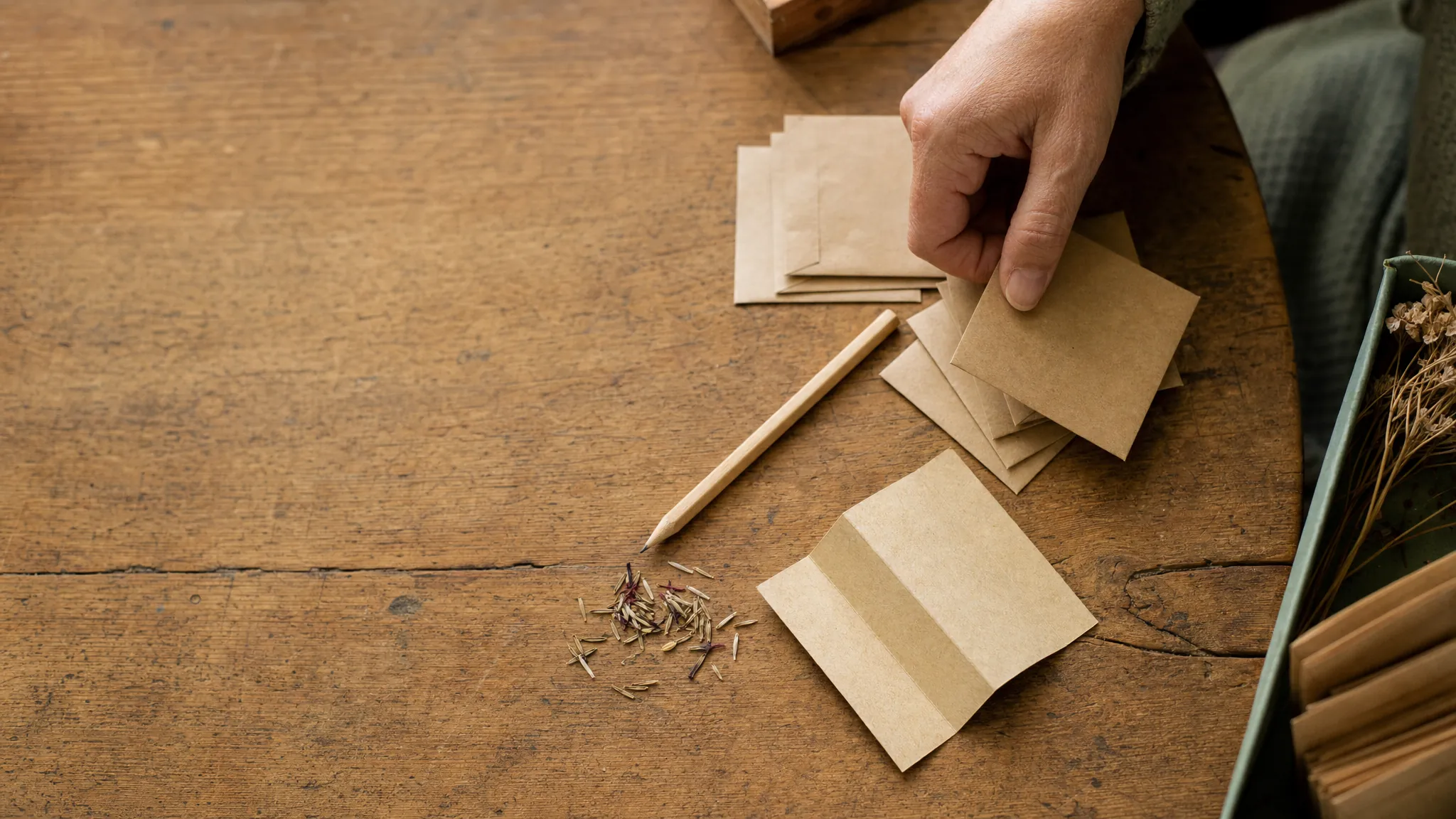
For tiny seeds
Petunia seeds are extremely small and may look like dust. The shop’s product pages call this out for a reason: handle them gently and follow the variety’s planting notes instead of burying them deeply.
01
Use the listing and included directions to check the variety’s sunlight, planting depth, and seasonal needs.
02
Temperature, light, moisture, and container size all affect a seedling’s progress.
03
Growing is variable. A little observation goes further than a one-size-fits-all promise.
Questions that come up at planting time
No. The shop’s petunia listings specifically note that the seeds are extremely tiny, while other varieties have their own seed size and planting guidance.
Some listed varieties can be started indoors or grown in suitable containers. Check the individual Etsy listing for the variety you choose.
Hybrid flowers can show natural variation in color and pattern. This is normal, and each individual listing provides the clearest expectation for that variety.